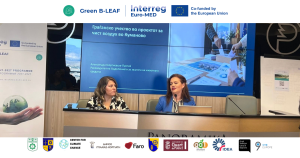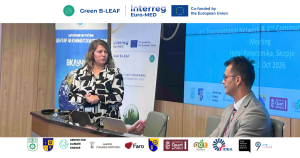
The two-day meeting on 30 September and 1 October brought together project partners, municipal representatives and other stakeholders to explore how green budgeting and citizen participation can help communities respond to local environmental and climate challenges.
How can local budgets become greener while giving citizens a more active role in decisions that shape their communities? This question guided the Second Transnational Network and Community of Practice meeting of Green B-LEAF – Green Participatory Budgeting for Local Environmental Action and Sustainable Future, held in Skopje, North Macedonia, on 30 September and 1 October.
The two-day event brought together project partners, municipal representatives and other stakeholders to exchange experiences, explore practical approaches to green participatory budgeting and strengthen cooperation between local authorities and their communities.
Day 1: Bringing stakeholders into local climate decision-making
The first day focused on stakeholders and the Green B-LEAF Community of Practice, creating space to discuss how municipalities can integrate environmental and climate priorities into local planning and budgeting.
The event opened with remarks from Aleksandar Stojanovski, Mayor of the Municipality of Gjorche Petrov, who presented the municipality’s investments in green measures and its work on climate action and environmental protection. Participants then reviewed progress within Green B-LEAF, with particular attention to the role of local authorities in advancing greener budgeting practices and sharing knowledge through the Community of Practice.
An example from North Macedonia demonstrated how participatory approaches can work in practice. The Municipality of Kumanovo presented its experience with citizen forums focused on cleaner air. Citizens took part in identifying and selecting priority measures, while students were also involved in deciding on the appearance of their school façade.
This experience illustrated how residents, including young people, can contribute to local decisions and help ensure that public investments respond to community priorities. It also prompted discussion about opportunities to strengthen citizen participation in municipal decision-making.
From discussion to practice: Green budgeting and citizen participation
The meeting included practical exercises designed to help participants apply the principles of green participatory budgeting.
During a community forum simulation, participants discussed local priorities and worked together to decide how to allocate limited resources. The exercise demonstrated the importance of deliberation, informed choices and collective decision-making when public funds must address competing needs.
Participants also used the Green Budget Tagging Tool (GBTT), which links budget activities and investments to environmental and climate objectives. By exploring how green priorities can be identified within local budgets, participants gained practical experience of an approach that can support more transparent and climate-conscious public spending.
Together, the exercises connected two essential elements of the Green B-LEAF approach: enabling citizens to influence spending priorities and helping municipalities identify how their budgets contribute to environmental and climate goals.
Day 2: Partner exchange and a study visit to Kumanovo
The second day focused on the project partnership and continued the exchange of experiences on implementing green participatory budgeting. A study visit to Kumanovo offered stakeholders an opportunity to explore local experience and see how citizen participation can inform environmental action and municipal decision-making.
The visit complemented the discussions in Skopje by connecting the project’s methods with examples from local practice. It also reinforced the importance of learning between municipalities and adapting participatory approaches to the needs and circumstances of different communities.
Although local environmental challenges differ across territories, municipalities share a need to make informed investment decisions, respond to climate risks, and involve residents in shaping local priorities. Transnational cooperation and the Green B-LEAF Community of Practice provide a framework for exchanging experiences and developing approaches that can be adapted in different local contexts.
Making local budgets work for greener communities
Green participatory budgeting is about more than making budgets greener. It combines informed decision-making, meaningful citizen participation and investments that respond to the real needs of communities and the climate challenges they face.
By bringing together local authorities, stakeholders and project partners, the meeting in Skopje advanced the exchange of practical knowledge on how these principles can be put into action. Through tools such as GBTT, community forums and peer learning, Green B-LEAF strives to help municipalities connect environmental priorities with public spending while creating more opportunities for citizens to shape the future of their communities.
Green B-LEAF continues to support local communities in turning climate priorities into practical action through greener budgeting, stronger participation and cooperation across Europe.